Field Notes · Natural History
Biodiversity, Everywhere You Look
Costa Rica covers about 0.03% of the planet’s land surface. And yet it holds roughly 5% of all known species on Earth — more than the entire United States and Canada combined. That’s not a marketing line; it’s a number biologists cite constantly, and it shows up the moment you step off a trail here.
Why so much life fits in so little space
The short answer is geography stacked on geography. Costa Rica sits on a narrow land bridge between two continents, with two coastlines and three mountain ranges compressed into a country smaller than West Virginia. That combination creates dozens of microclimates within a few hours’ drive of each other:
- Lowland rainforest near sea level, hot and humid year-round.
- Cloud forest above 1,500 m, cool and perpetually misted.
- Tropical dry forest on the Nicoya Peninsula, leafless and gold for half the year.
- Wetlands and mangroves along both coasts, nurseries for fish, crabs, and caimans.
Species that evolved in isolation on two continents met in the middle here, and the terrain gave each one a niche to specialize into. That’s the biological engine behind the numbers.
It’s not just the rainforest postcard
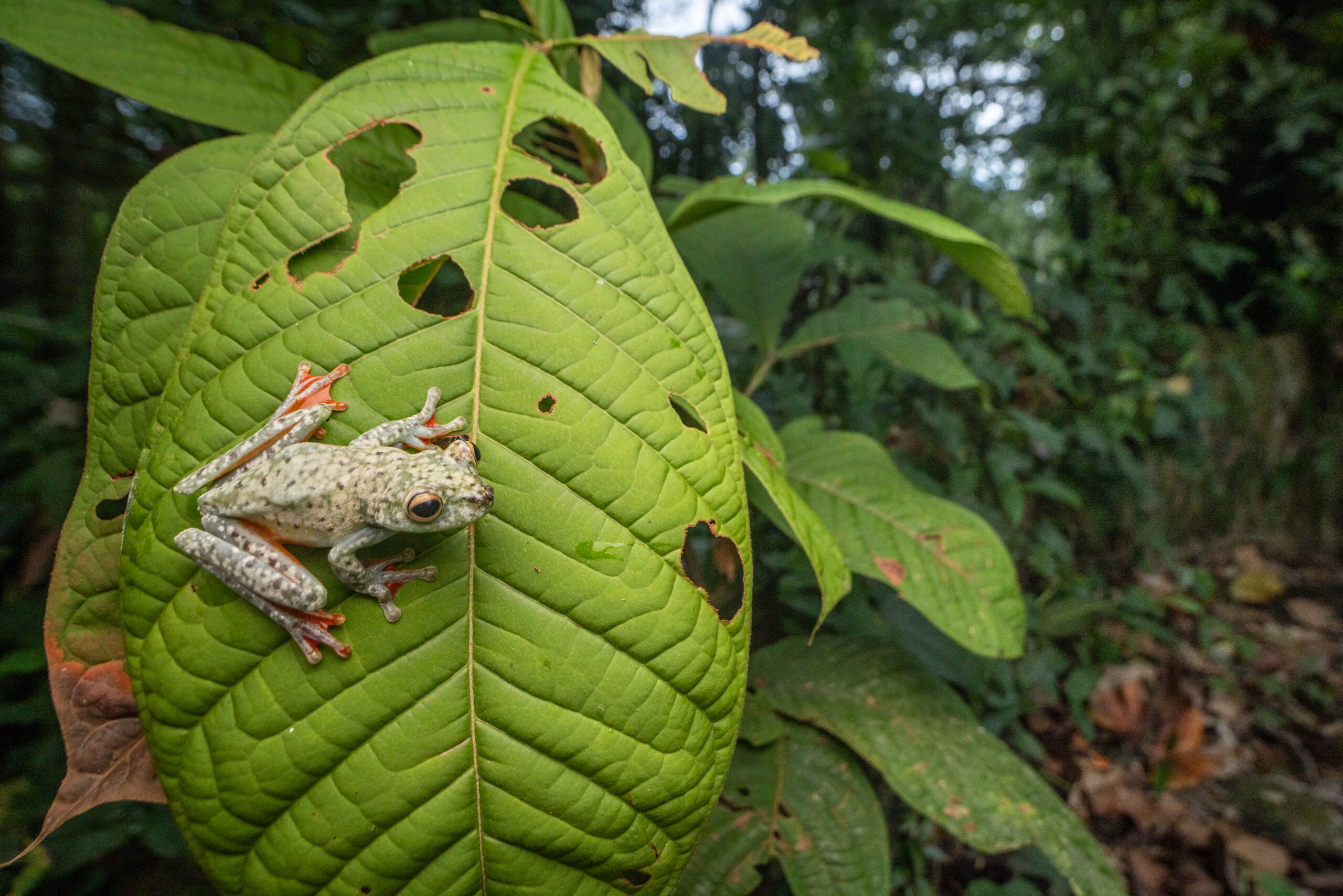
The rainforest gets the photos, but the diversity is genuinely everywhere. A single hotel garden in La Fortuna can host more bird species than most European countries. A roadside ditch can hold three frog species found nowhere else. Even San José’s urban parks have sloths. You don’t need a remote expedition to see it — you need to slow down and look at what’s already around you.
Protected by design, not by accident
None of this survived by luck. Roughly a quarter of Costa Rica’s territory is under some form of environmental protection — national parks, biological reserves, and private reserves — the highest proportion of any country in the world. That policy, built over the last 50 years, is the reason the biodiversity is still here to see.
See it for yourself
Our small-group expeditions are built around exactly this — moving slowly enough through Costa Rica’s ecosystems to notice what’s actually there, guided by naturalists who know where to look. See upcoming Costa Rica tours →