
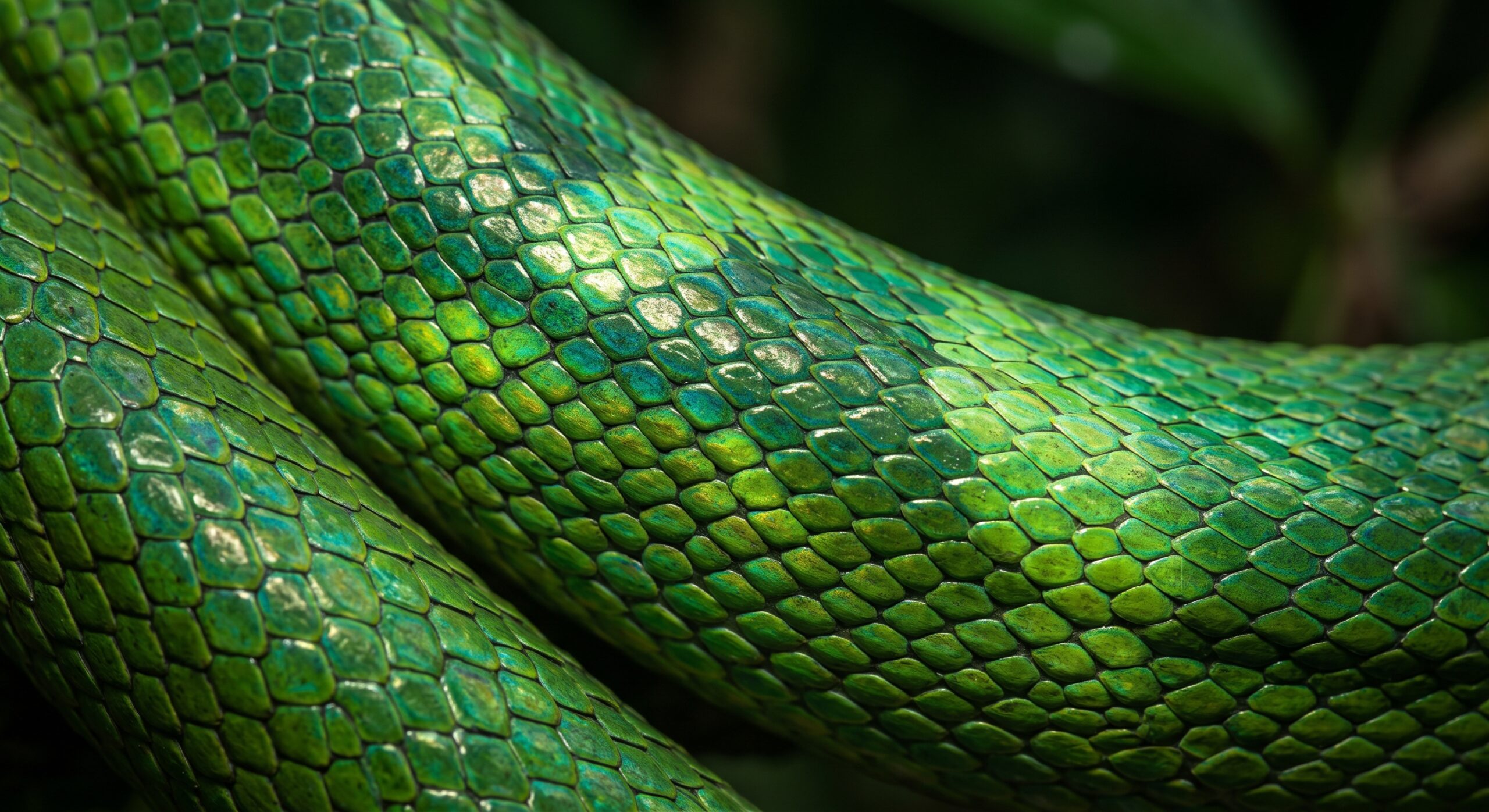
Especie destacada · Notas de campo
Reptiles de La Fortuna de San Carlos
Por qué La Fortuna es un punto caliente herpetológico
Ubicada en las estribaciones del norte del Volcán Arenal, La Fortuna de San Carlos se encuentra en la confluencia de tres ecosistemas: el bosque húmedo de tierras bajas del Caribe, el bosque lluvioso premontano y el bosque secundario surgido tras décadas de agricultura. Ese mosaico, sumado a noches cálidas que rara vez bajan de 22 °C y a lluvias que superan en promedio los 3.500 mm al año, la convierte en uno de los rincones más ricos de Costa Rica en reptiles.
En una sola caminata nocturna guiada cerca de la base del volcán, no es raro registrar cinco o seis especies. En una semana completa de trabajo de campo, esa cifra sube a más de veinte. Estas son las especies que más vale la pena viajar a ver, y cómo encontrarlas realmente.
1. Víbora de pestañas (Bothriechis schlegelii)
El ícono indiscutible. Una pequeña víbora arborícola, que rara vez supera los 60 cm, y que presenta una paleta completa de amarillos, verdes, marrones e incluso morfos rosados. Su nombre viene de las escamas elevadas sobre cada ojo que le dan un permanente ceño fruncido.
Dónde buscarla: tallos bajos de heliconia y frondas de palma cerca de quebradas. Casi siempre a la altura de la cabeza o más abajo, enroscada e inmóvil.
Mejor momento: caminatas al final de la tarde y de noche, entre abril y octubre.
Nota de campo: venenosa. Nunca te acerques a menos de un metro. Una buena linterna frontal, paciencia y un guía es todo lo que necesitas.
2. Basilisco verde / lagarto Jesucristo (Basiliscus plumifrons)
El que corre sobre el agua. Los machos alcanzan hasta 90 cm, con una triple cresta a lo largo del dorso y la cola y un color esmeralda que parece irreal bajo la luz moteada. Cuando se asustan, corren sobre la superficie de las quebradas en sus patas traseras: la física a su favor durante un par de segundos.
Dónde buscarla: orillas de ríos y ramas bajas sobre el agua. El Río Fortuna y el Río Arenal tienen poblaciones.
Mejor momento: media mañana, cuando se calientan en los parches de sol.
3. Terciopelo / Fer-de-lance (Bothrops asper)
La serpiente de mayor importancia médica de Centroamérica. De complexión robusta y patrón críptico, es responsable de la mayoría de los casos graves de mordedura de serpiente en Costa Rica. Los adultos suelen superar 1,5 m; algunos individuos pasan los 2 m.
Dónde buscarla: hojarasca en los bordes del bosque, cerca de antiguas plantaciones y a lo largo de senderos alterados. No salgas a buscarla sin un guía: es una especie que se observa mejor a una distancia respetuosa y con un ojo entrenado al frente.
Mejor momento: nocturna y crepuscular.
4. Iguana verde (Iguana iguana)
El lagarto más grande que verás con regularidad. Los machos adultos con coloración naranja de reproducción pueden alcanzar 1,8 m de la nariz a la cola. Completamente arborícolas de adultos, se asolean en el dosel sobre los ríos y se lanzan al agua cuando se las molesta.
Dónde buscarla: el dosel de los árboles sobre cualquiera de los ríos de la región, especialmente en la época seca (diciembre–abril), cuando anidan en los bancos de arena.
5. Boa constrictor (Boa imperator)
La serpiente más grande de la región. No venenosa, semiarborícola de juvenil y más terrestre de adulta. Son habituales ejemplares de más de 2,5 m. Su dieta va de murciélagos y aves a pequeños mamíferos: un depredador clave en el bosque secundario.
Dónde buscarla: huecos de árboles durante el día; suelo del bosque y ramas bajas de noche.
Nota de campo: completamente inofensiva si se la deja en paz. Nunca la manipules sin permiso y sin experiencia.
6. Anolis (varias especies)
La Fortuna alberga al menos cinco especies de anolis, cada una en su propio microhábitat: Anolis limifrons en la vegetación baja, Anolis biporcatus más arriba en el dosel, Anolis humilis en la hojarasca. Ver a los machos extender sus papadas de colores en exhibiciones territoriales es uno de los pequeños placeres de una caminata por el bosque.
7. Bejuquilla parda (Oxybelis aeneus)
Increíblemente delgada, de hasta 1,5 m de largo y a menudo no más gruesa que un lápiz. Cuando se siente amenazada, abre la boca de par en par para mostrar un interior azul-negro oscuro: una exhibición sorprendente para una serpiente de colmillos traseros, levemente venenosa y prácticamente inofensiva para los humanos.
Dónde buscarla: arbustos y ramas bajas en los bordes del bosque. Busca la silueta que no coincide con un bejuco real: ese leve adelgazamiento hacia la cabeza.
8. Iguana de casco (Corytophanes cristatus)
Pequeña, de aspecto prehistórico y tan críptica que es casi invisible. Crece hasta unos 35 cm, pasa el día inmóvil sobre tallos verticales y deja que el musgo y los líquenes crezcan sin perturbación sobre su piel. Uno de los hallazgos más buscados por los herpetólogos de la región.
Cómo hacer herpetología en La Fortuna de forma responsable
Tres reglas mantienen seguros tanto a ti como al ecosistema:
- Nunca manipules especies venenosas. Fotografía, observa y sigue adelante.
- Ve con un guía local autorizado. Conocen los senderos, el protocolo ante el veneno y dónde están realmente los animales.
- No dejes rastro. Devuelve las rocas y los troncos a su posición exacta: muchos de estos animales dependen de microhábitats específicos.
Mejor temporada para observar reptiles
La temporada verde (mayo–noviembre) es la de mayor actividad: alta humedad, noches cálidas y serpientes activas. La temporada seca es mejor para ver lagartijas asoleándose, pero más lenta para las serpientes. Las caminatas nocturnas son esenciales: la mayoría de las especies están activas después del anochecer.
¿Listo para verlos por ti mismo?
Nuestras expediciones en grupos pequeños en la región de Arenal están diseñadas para personas realmente interesadas en reptiles, anfibios y fotografía de vida silvestre. Cupos limitados cada temporada. Ver los próximos tours en Costa Rica →